
Fraud Intelligence Guide
Promotion, Free-Trial and Bonus Abuse
Protect the offer while keeping legitimate participation easy.
By Michael Joseph · Last updated: October 23, 2026
What to understand
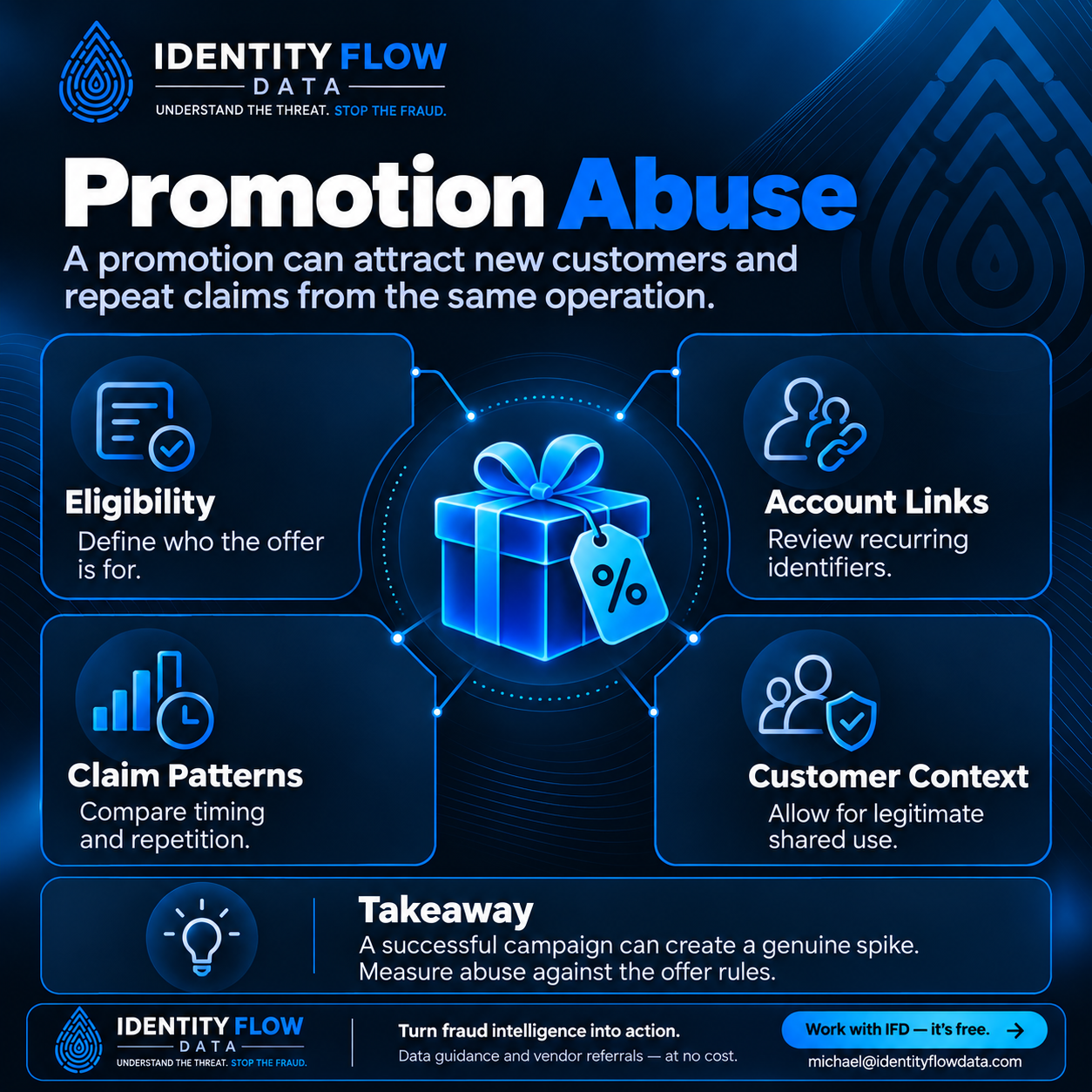
Promotions work when the intended customer receives the intended benefit. Abuse can arise when connected accounts repeatedly claim limited offers or use the program outside its eligibility rules. Detection should start with a clear policy and the outcome the business wants to protect.
Promotion and referral eligibility
Review repeated claims, account connections and referral relationships in the context of the published terms. A successful campaign naturally creates clusters and volume. Distinguish those effects from coordinated claims that fail the eligibility rules, and document the reason for limiting a benefit.
Signals to review together
When offers are meant for a limited audience, account count alone may not show who is receiving the benefit.
- Eligibility: Define who the offer is for
- Account Links: Review recurring identifiers
- Claim Patterns: Compare timing and repetition
- Customer Context: Allow for legitimate shared use
Free trials and signup bonuses
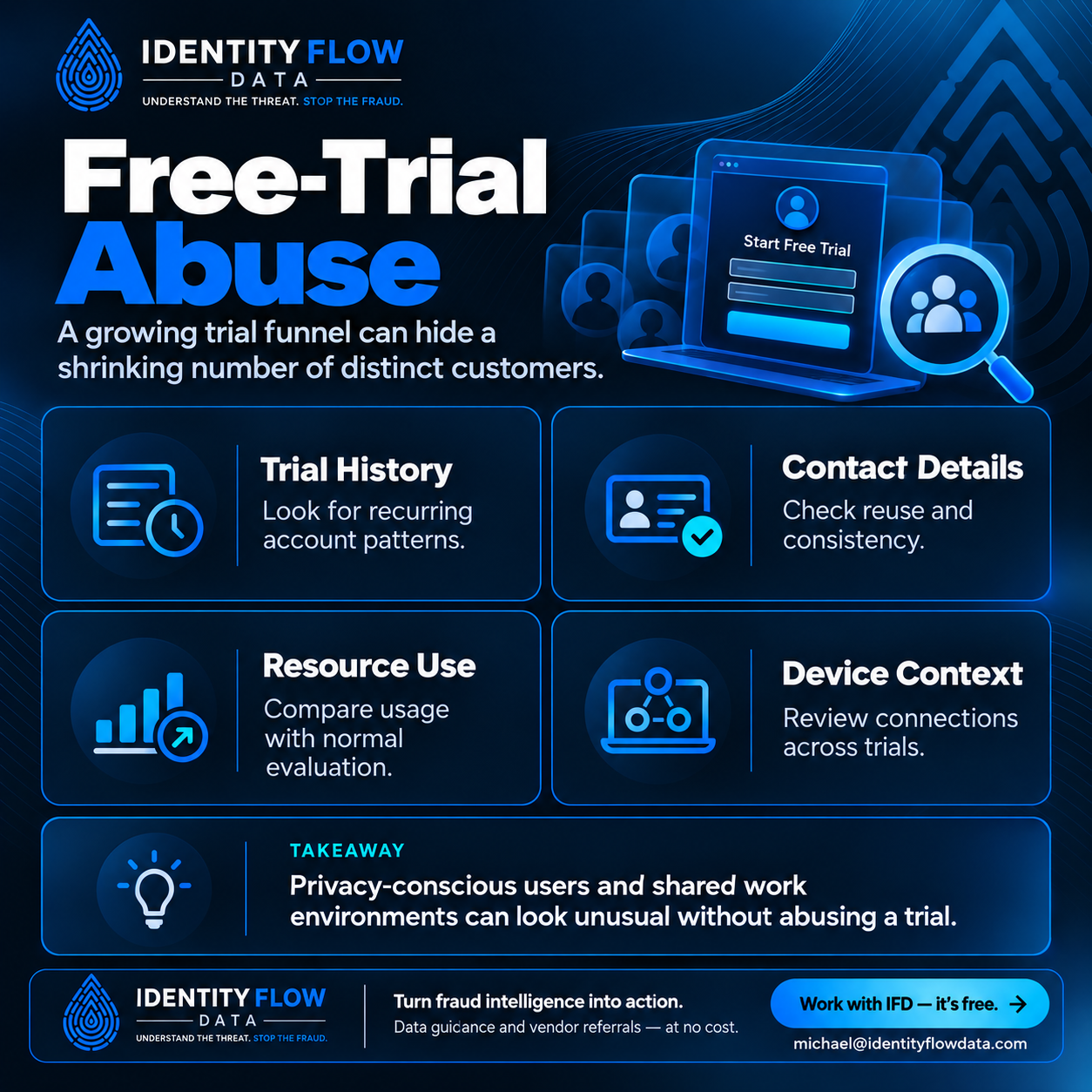
A free trial supports genuine product evaluation; a bonus rewards qualifying activity. Compare account creation with subsequent use, repeated trial restarts and the action required to earn a bonus. Shared devices and household details have legitimate explanations. Evaluate unnecessary friction alongside benefits saved.
Free-Trial Abuse
Repeated accounts may be used to keep accessing resources intended for a limited evaluation period.
- Trial History: Look for recurring account patterns
- Contact Details: Check reuse and consistency
- Resource Use: Compare usage with normal evaluation
- Device Context: Review connections across trials
Bonus Abuse
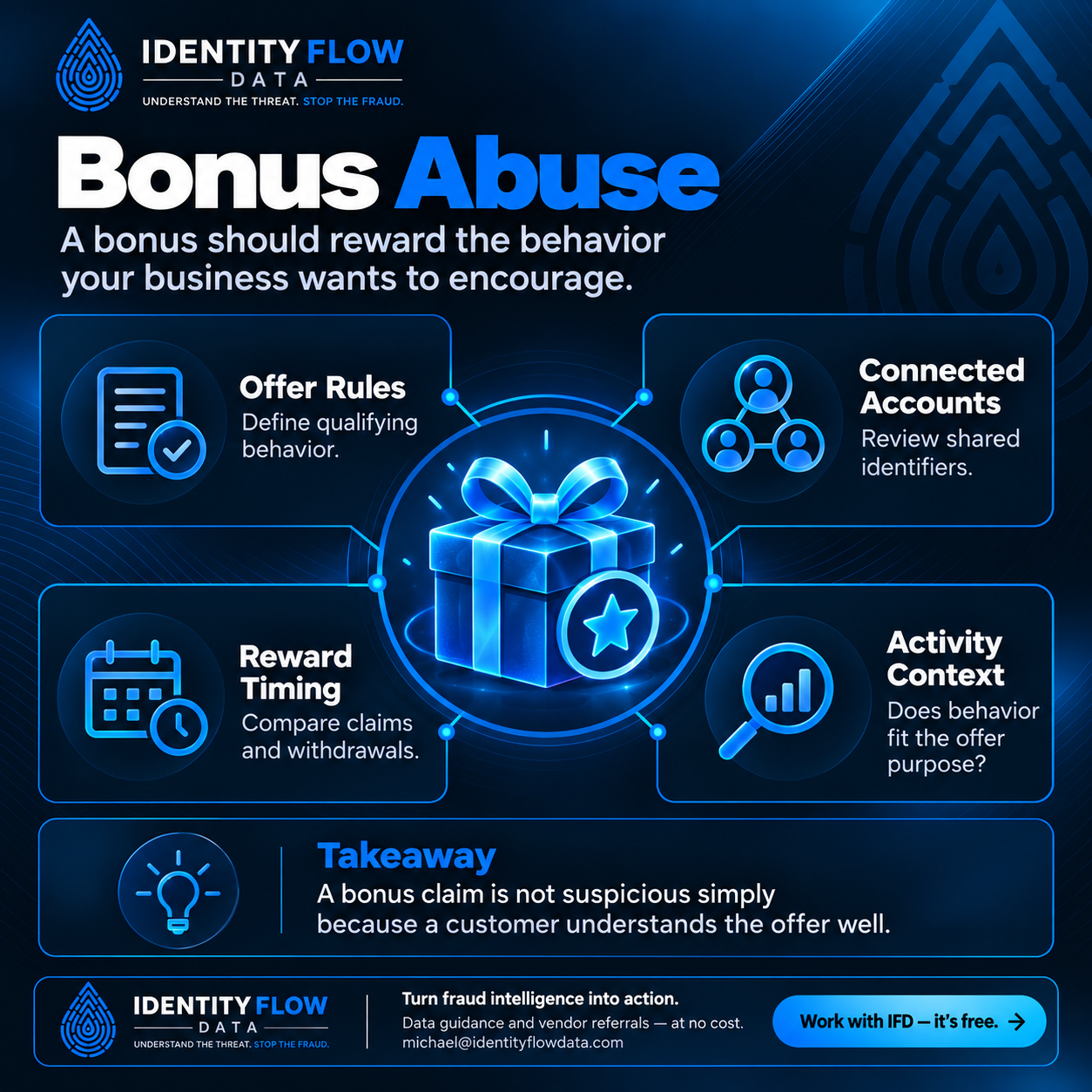
Multiple accounts and coordinated activity can redirect that value toward repeated incentive collection.
- Offer Rules: Define qualifying behavior
- Connected Accounts: Review shared identifiers
- Reward Timing: Compare claims and withdrawals
- Activity Context: Does behavior fit the offer purpose?
Keep legitimate activity in view
A successful campaign can create a genuine spike. Measure abuse against the offer rules.
How IFD can help
Tell us which decision you want to improve and what evidence your team already has. IFD helps clarify useful signals, compare suitable providers and scope an evaluation. We review coverage, limitations and practical fit so your team can decide on the next step.
Common questions
Choose your starting point with IFD.
Understand your business’s exposure
Request a scoped review of relevant underground activity and fraud techniques involving your business. No customer dataset required.
Request a Free Exposure ScanEvaluate your fraud data
Discuss a sample evaluation of relevant fraud and identity signals. No IFD coordination fee; scope and any provider charges agreed first.
Request a Data EvaluationThere is no advisory fee for buyers. IFD is compensated by participating providers when a qualifying purchase results from a referral. We explain applicable arrangements upfront. Any provider testing or product charges are confirmed before you proceed.
Related guidance