
Industry Guidance
Complementary Fraud Signals for Identity Verification
Keep each check's meaning clear.
By Michael Joseph · Last updated: October 23, 2026
Fraud guidance for your workflow
Identity-verification providers and teams may need context beyond a document or field-level result. Contact, device and network signals can help explain a session or identify a question for further review. IFD helps evaluate complementary capabilities around a defined verification gap.
Separate assurance from risk context
Record what a verification result establishes and what an additional risk indicator merely suggests. Avoid presenting a successful contact check as full identity assurance or a network classification as a failed identity check.
Four areas to connect
Identity workflows become more informative when validation results are considered alongside device, network, and behavioral context.
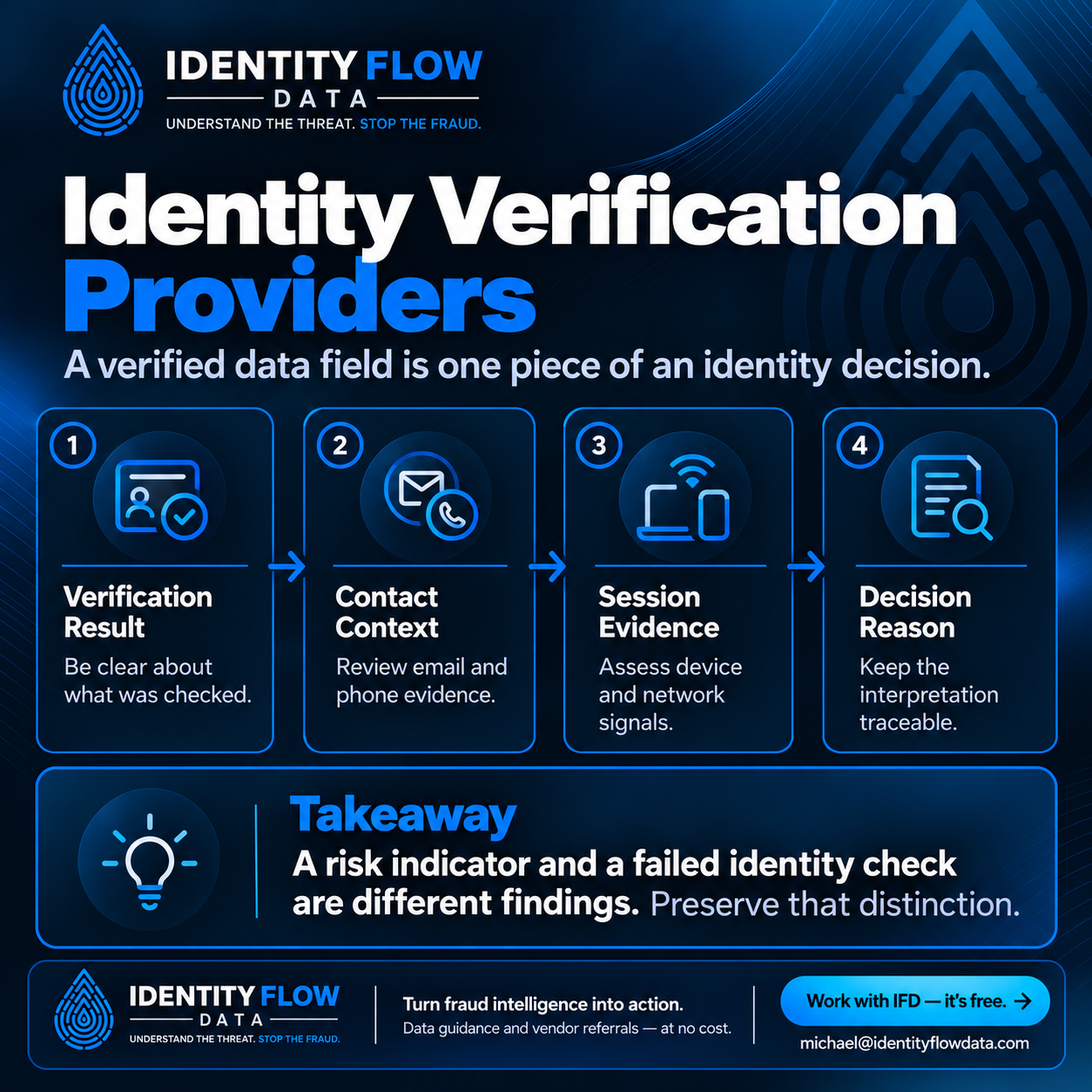
- Verification Result: Be clear about what was checked
- Contact Context: Review email and phone evidence
- Session Evidence: Assess device and network signals
- Decision Reason: Keep the interpretation traceable
Evaluate the combined workflow
Assess coverage, timing and decision usefulness alongside customer completion. Preserve traceable reasons so reviewers can understand why the extra evidence mattered.
Keep the customer context
A risk indicator and a failed identity check are different findings. Preserve that distinction.
What working with IFD looks like
Tell us which decision you want to improve and what evidence your team already has. IFD helps clarify useful signals, compare suitable providers and scope an evaluation. We review coverage, limitations and practical fit so your team can decide on the next step.
- Define one abuse pattern and the decision it affects
- Identify the evidence gaps and relevant provider capabilities
- Agree a representative evaluation and meaningful outcomes
- Review results, limitations and commercial terms before deciding
Common questions
Choose your starting point with IFD.
Understand your business’s exposure
Request a scoped review of relevant underground activity and fraud techniques involving your business. No customer dataset required.
Request a Free Exposure ScanEvaluate your fraud data
Discuss a sample evaluation of relevant fraud and identity signals. No IFD coordination fee; scope and any provider charges agreed first.
Request a Data EvaluationThere is no advisory fee for buyers. IFD is compensated by participating providers when a qualifying purchase results from a referral. We explain applicable arrangements upfront. Any provider testing or product charges are confirmed before you proceed.
Related guidance