
Fraud Intelligence Guide
Compromise Evidence for Fraud and Account Decisions
An exposure signal needs account-specific context.
By Michael Joseph · Last updated: October 23, 2026
What to understand
Evidence that an identifier or device may have been compromised can inform a fraud review. It does not establish that the current user is the attacker or that the current session is malicious. Teams need to understand the source, freshness and relevance of the evidence before choosing a response.
Connect evidence with present activity
Determine what the signal actually describes: a historical exposure, an observed association or a current device finding. Compare it with access changes and sensitive actions on the account. Retain the distinction between known facts and an investigative hypothesis.
Signals to review together
Leaked passwords, stolen identity information, and compromised infrastructure can add context to later access and activity.
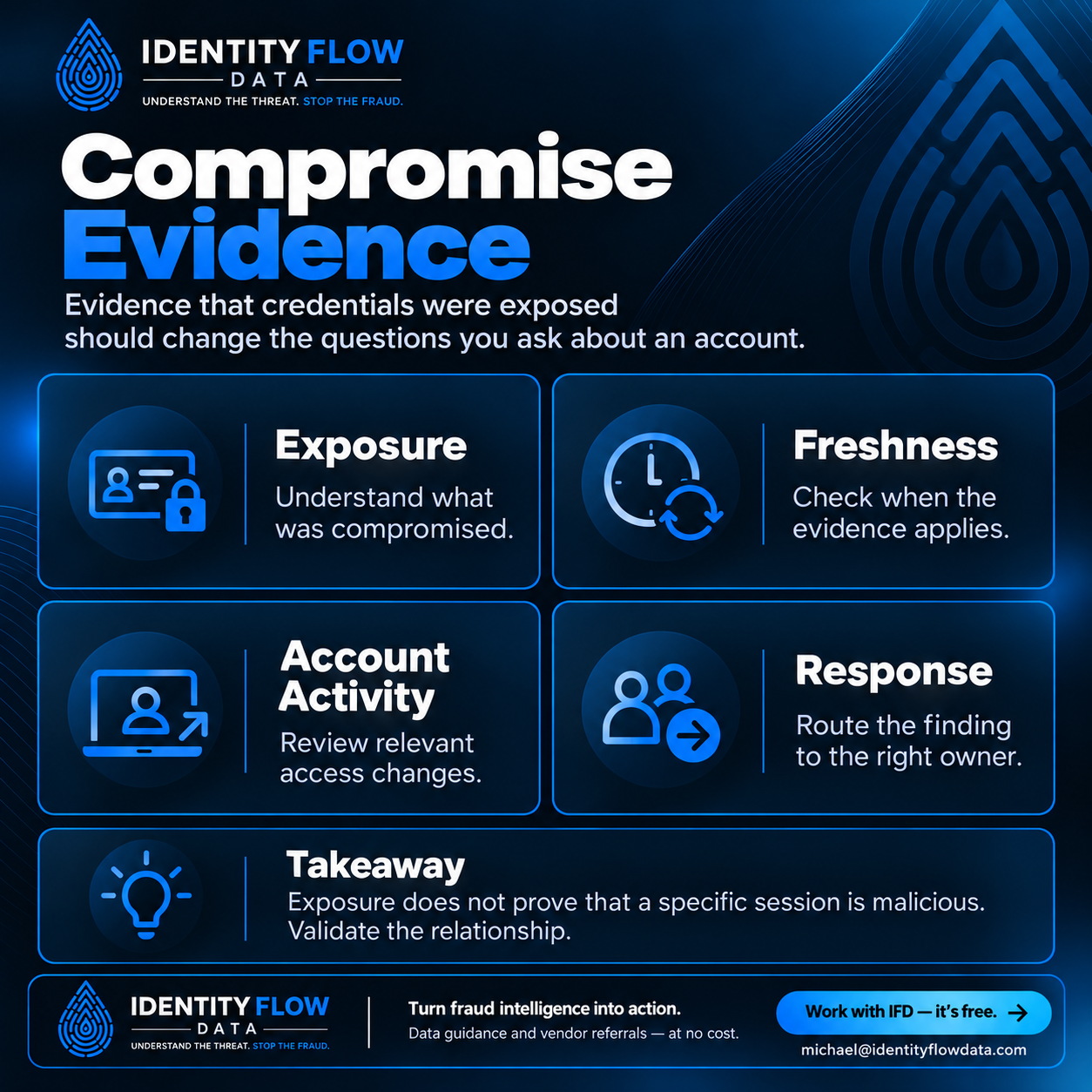
- Exposure: Understand what was compromised
- Freshness: Check when the evidence applies
- Account Activity: Review relevant access changes
- Response: Route the finding to the right owner
Handle malware-related abuse in the right workflow
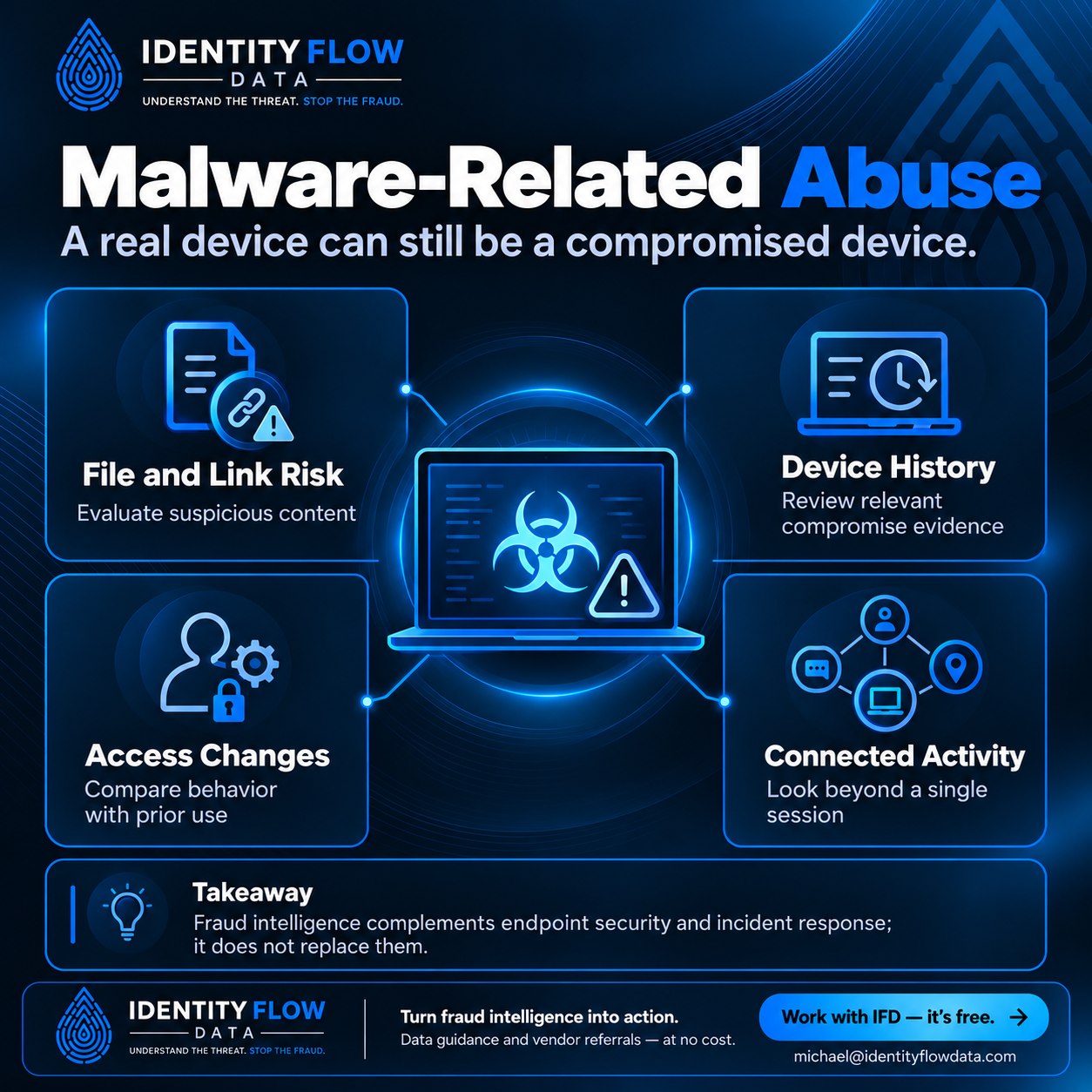
A real device can be compromised. Changes in access or connected activity may justify further review, but fraud intelligence does not replace endpoint security or incident response. Route findings to the appropriate owner and use account-specific verification or review where justified.
Malware-Related Abuse
That matters when familiar-looking access is used to reach an account, expose information, or support other abusive activity.
- File and Link Risk: Evaluate suspicious content
- Device History: Review relevant compromise evidence
- Access Changes: Compare behavior with prior use
- Connected Activity: Look beyond a single session
Keep legitimate activity in view
Exposure does not prove that a specific session is malicious. Validate the relationship.
How IFD can help
Tell us which decision you want to improve and what evidence your team already has. IFD helps clarify useful signals, compare suitable providers and scope an evaluation. We review coverage, limitations and practical fit so your team can decide on the next step.
Common questions
Choose your starting point with IFD.
Understand your business’s exposure
Request a scoped review of relevant underground activity and fraud techniques involving your business. No customer dataset required.
Request a Free Exposure ScanEvaluate your fraud data
Discuss a sample evaluation of relevant fraud and identity signals. No IFD coordination fee; scope and any provider charges agreed first.
Request a Data EvaluationThere is no advisory fee for buyers. IFD is compensated by participating providers when a qualifying purchase results from a referral. We explain applicable arrangements upfront. Any provider testing or product charges are confirmed before you proceed.
Related guidance