
Fraud Intelligence Guide
Phishing and Smishing: Connect Messages to Account Risk
Review the request, destination and follow-on activity.
By Michael Joseph · Last updated: October 23, 2026
What to understand
Phishing uses deceptive communication to persuade someone to reveal information or take an unsafe action. Smishing applies that pattern through text messages. For fraud teams, the useful question is often how the interaction connects to account access, changed details or a payment.
Assess the interaction in context
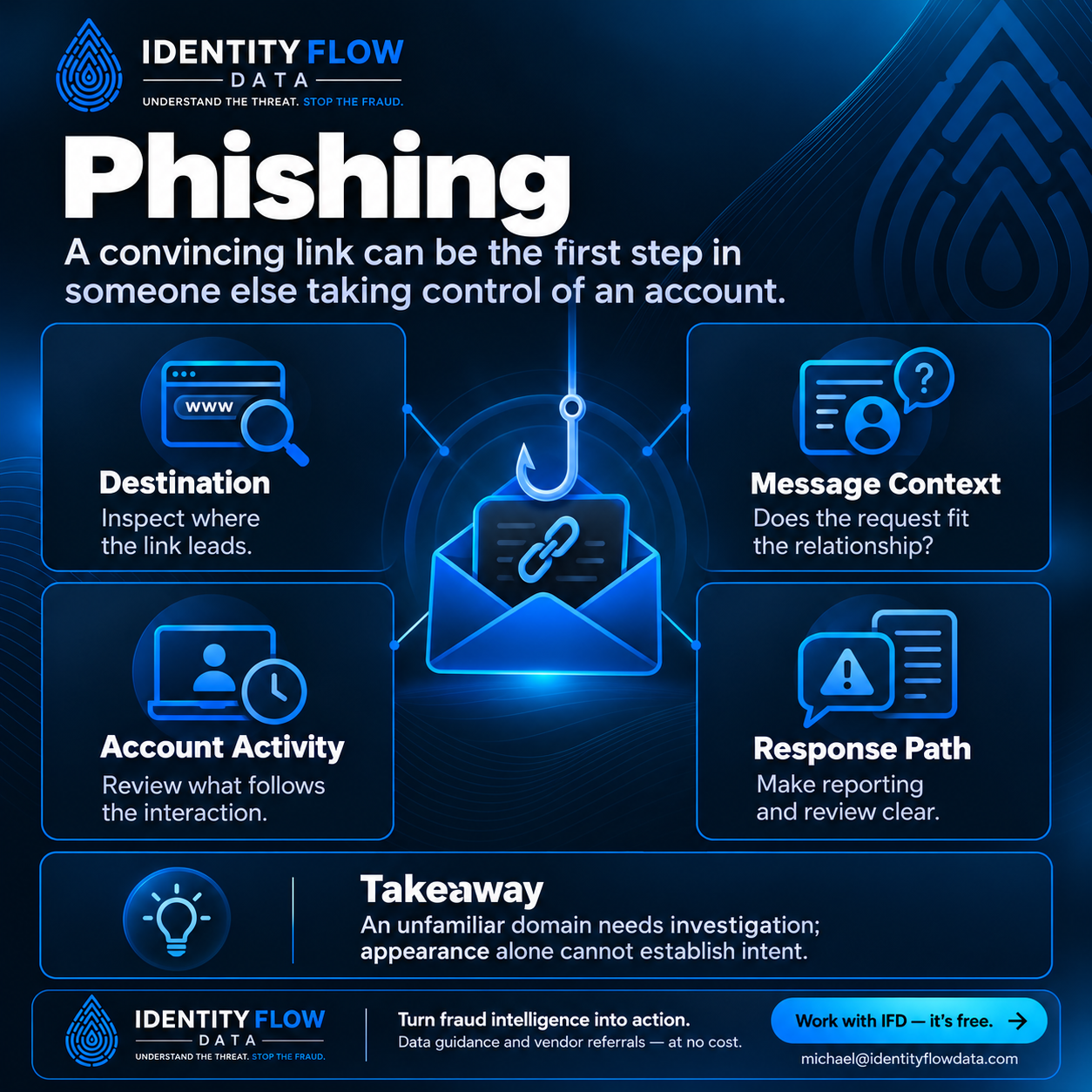
Review where a link leads, what action is requested and whether that request fits the claimed relationship. Appearance and urgency can inform concern but do not independently establish intent. Give users and support teams a clear route to report suspicious interactions.
Signals to review together
Phishing uses deceptive messages and destinations to persuade people to reveal information or take a harmful action.
- Destination: Inspect where the link leads
- Message Context: Does the request fit the relationship?
- Account Activity: Review what follows the interaction
- Response Path: Make reporting and review clear
Connect the report to the account journey
Look for relevant access changes and sensitive actions after the interaction. Preserve the timeline and route findings to the appropriate response team. Additional link or identity context can support a review, but it should not replace account protection and incident handling.
Smishing
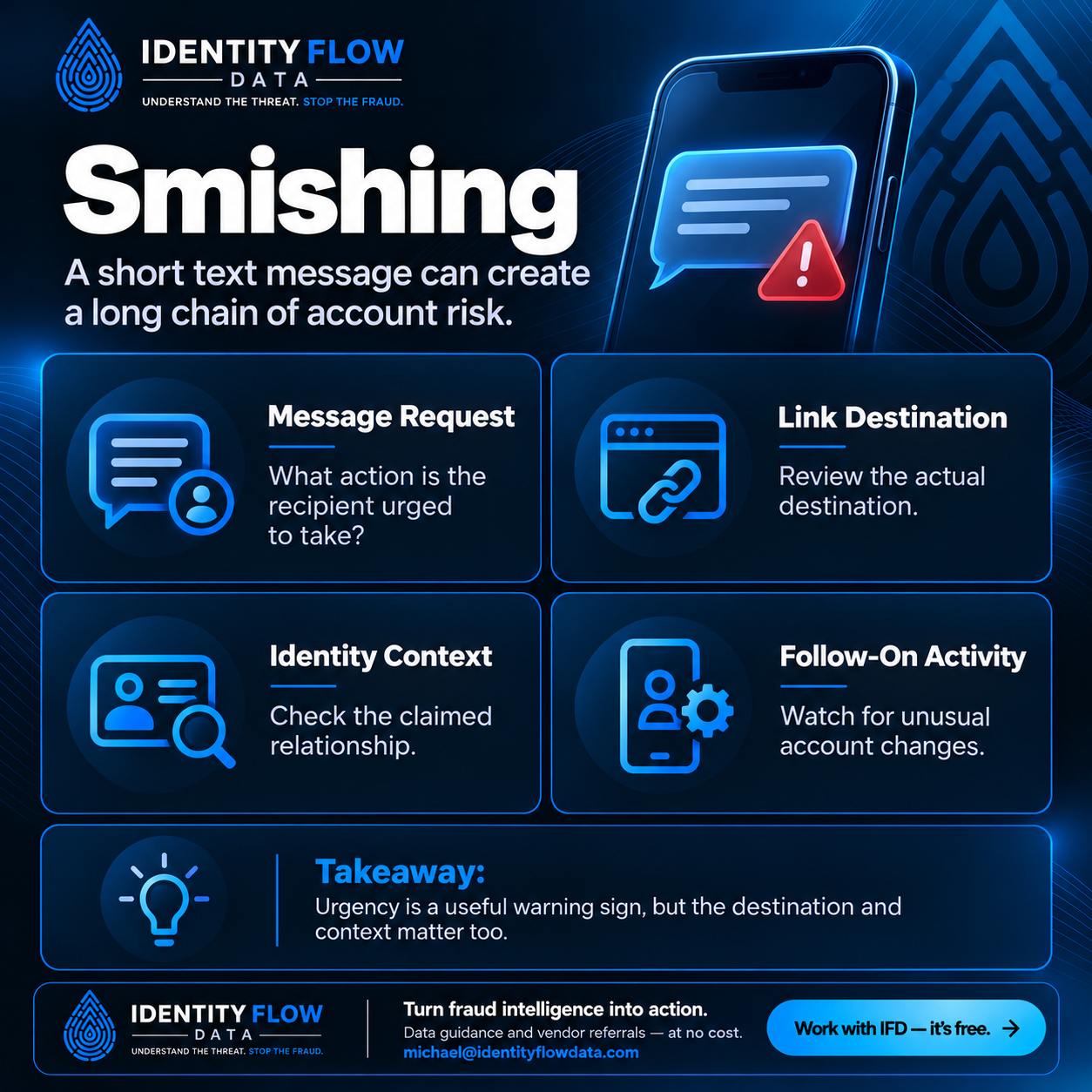
A message about a delivery, payment, or account issue may direct a customer to a deceptive destination.
- Message Request: What action is the recipient urged to take?
- Link Destination: Review the actual destination
- Identity Context: Check the claimed relationship
- Follow-On Activity: Watch for unusual account changes
Keep legitimate activity in view
An unfamiliar domain needs investigation; appearance alone cannot establish intent.
How IFD can help
Tell us which decision you want to improve and what evidence your team already has. IFD helps clarify useful signals, compare suitable providers and scope an evaluation. We review coverage, limitations and practical fit so your team can decide on the next step.
Common questions
Choose your starting point with IFD.
Understand your business’s exposure
Request a scoped review of relevant underground activity and fraud techniques involving your business. No customer dataset required.
Request a Free Exposure ScanEvaluate your fraud data
Discuss a sample evaluation of relevant fraud and identity signals. No IFD coordination fee; scope and any provider charges agreed first.
Request a Data EvaluationThere is no advisory fee for buyers. IFD is compensated by participating providers when a qualifying purchase results from a referral. We explain applicable arrangements upfront. Any provider testing or product charges are confirmed before you proceed.